Psychosomatic symptoms are real physical complaints – even when medical test results remain normal. Here you’ll learn why your body reacts this way and how your nervous system plays a central role in it.
Psychosomatic symptoms are physical complaints that arise through strain on the nervous system. Your body then reacts in a real and tangible way – without an organically detectable illness.
These include, for example:
All of these symptoms are physical. They arise through real processes: hormones, muscle tension, breathing, stimulus processing, blood circulation and the autonomic nervous system.
Health insurance companies describe psychosomatic and somatoform complaints as among the most common reasons why people seek medical help – often without a clear diagnosis.
The most important point first: Your body is not doing anything wrong. It is reacting to strain.
When you experience stress, anxiety or emotional overwhelm over a longer period of time, your nervous system becomes more sensitive. The body switches into protective programs that are actually useful – but can feel very distressing in everyday life.
Typical triggers of psychosomatic symptoms are:
Your nervous system then evaluates stimuli more quickly as “dangerous.” Even harmless bodily sensations can suddenly trigger alarm – palpitations, fluttering in the stomach, heat, cold, dizziness.
Stress is a physical reaction — not just a feeling in your head. When your system goes into alert mode, your entire physiology changes.
This affects, among other things:
These processes are well researched. The Max Planck Society describes how closely emotional strain and bodily sensations are connected – especially through the autonomic nervous system.
Because they are real.
With psychosomatic complaints, the body signals strain, even when medical test results remain normal. The symptoms do not arise “in your head,” but through biological processes.
Your nervous system sometimes sounds the alarm even though there is no real danger.
Like a smoke alarm that goes off because of steam, your system can overreact when it has become too sensitive. Small stimuli then trigger strong physical reactions.
This explains, among other things:
Your body does not mean you any harm. It is trying to protect you – it is simply being overly cautious
Many people affected report long rounds of medical examinations — often without any result.
It is important to know:
For many people, the greatest suffering does not come from the symptom itself – but from the fear that it could still be something serious.
That is exactly why a body-based approach can feel so relieving.
It is not about “controlling” symptoms, but about relieving your nervous system.
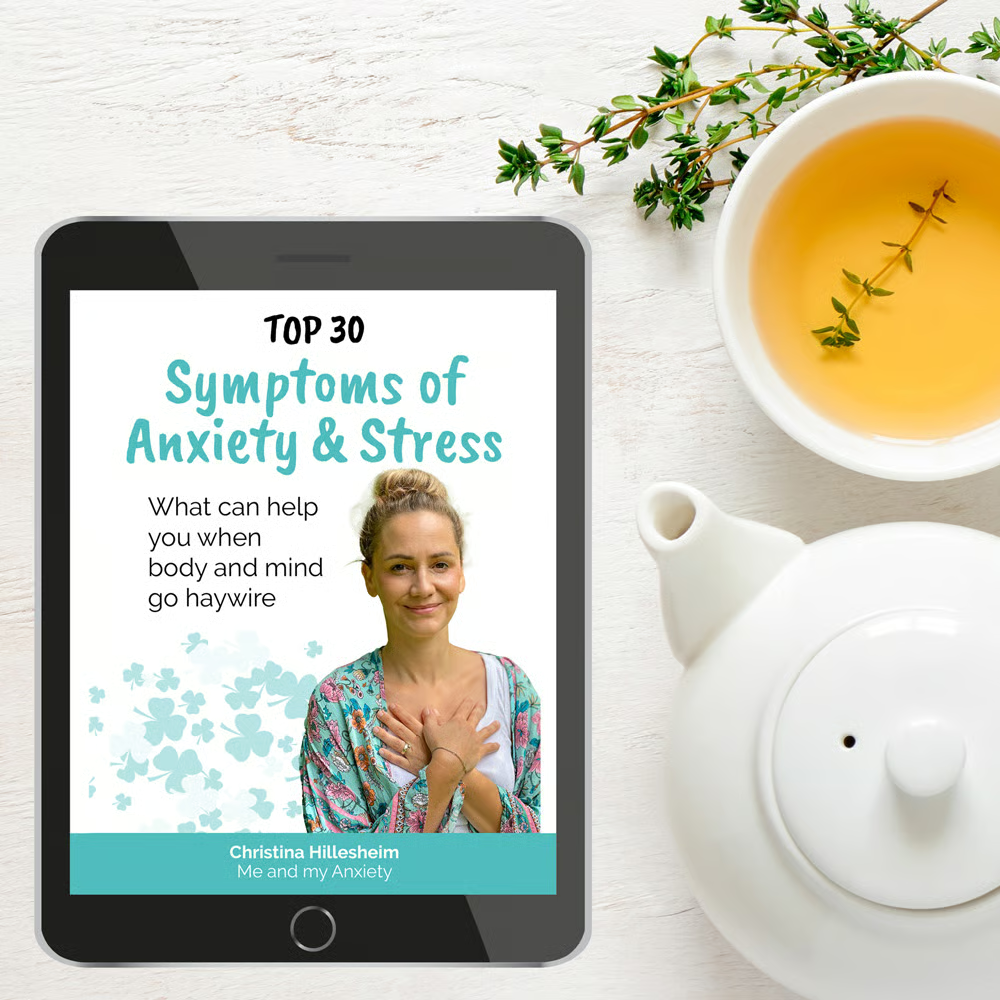
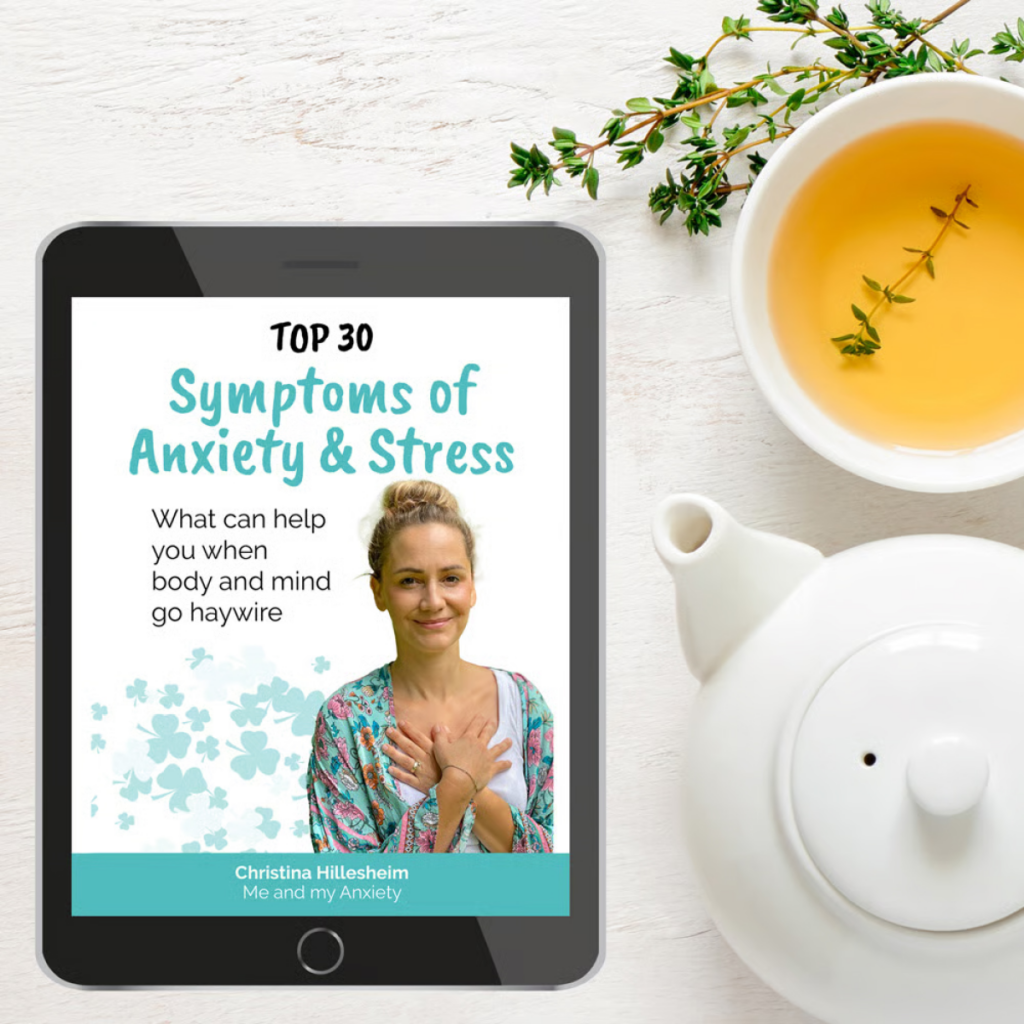
Racing heart, dizziness, nausea, chest pressure … Does your body sometimes feel like it’s going haywire – and you find yourself wondering if it really is “just” anxiety?
Then this e-book is exactly what you need:
👉 TOP 30 Symptoms of Anxiety & Stress
Inside, I reveal the 30 most common physical symptoms associated with anxiety and stress, explain them in easy-to-understand terms, and offer gentle, immediately actionable tips on how to soothe them, step by step.
Many people think psychosomatic complaints are a sign of weakness. The opposite is true:
They show how finely your nervous system works – and how seriously your body takes strain.
These symptoms are a sign of overwhelm, not a lack of strength.

About the Author: Christina is a qualified sociologist, bestselling author from germany. She knows from personal experience what it is like to suffer from anxiety, panic and exhaustion.
After a burnout and years with depression and anxiety disorder, she fundamentally changed her life.
In her Online Courses, her E-Books and podcasts, Christina shows how psychosomatic complaints develop, how your nervous system communicates with you — and how you can manage to ease such physical symptoms.
No. They are physically measurable and arise through real physiological processes.
They often feel threatening, but are rarely medically dangerous. Nevertheless, you should have complaints medically checked.
Through the interaction of stress, emotions and the nervous system. The body reacts in a real way, even without an organic finding.
Anxiety activates the stress system — and makes the body more sensitive to internal stimuli.
Would you like to learn more about your psychosomatic symptoms and find out what can help you alleviate them? Then feel free to check out this e-book: