Are you looking for exercises to help with heart palpitations?
Then you probably know that unpleasant feeling of your heart suddenly skipping a beat, racing out of nowhere or doing other strange things that feel like heart rhythm irregularities.
Have you already had it checked by a doctor with an ECG, and no organic cause was found?
Then in this article, I’d like to share my own experience with heart palpitations and the exercises that have helped me the most.
Important: This article does not replace a visit to your doctor.
If heart palpitations, a racing heart or other heart rhythm irregularities are causing you significant distress or happen frequently, please contact your doctor and have an ECG done to rule out any organic cause behind your symptoms.
I used to experience heart palpitations very often during my anxiety and panic attacks, and they unsettled me every single time – sometimes to the point where I was convinced I might be having a heart attack or about to faint.
And maybe you know what happens next:
The fear of having heart disease or collapsing makes everything even worse.
Because then our body starts running the good old fight-or-flight program – with all the physical consequences that come with it. Stress hormones like adrenaline and cortisol are released, blood pressure rises, the heart beats even faster …
But here’s the good news:
You can interrupt this vicious cycle and do something very specific to calm your heart, ease heart palpitations and slow down a racing heartbeat.
Because very often, these kinds of heart rhythm irregularities and extra beats are completely harmless and “simply” linked to inner stress.
That means:
As soon as we become calmer on the inside, the heart often begins to calm down too.
In this article, I’ll show you 5 simple, immediate exercises for heart palpitations that have personally helped me a lot — and that can help you calm your nervous system and reduce functional heart rhythm irregularities.
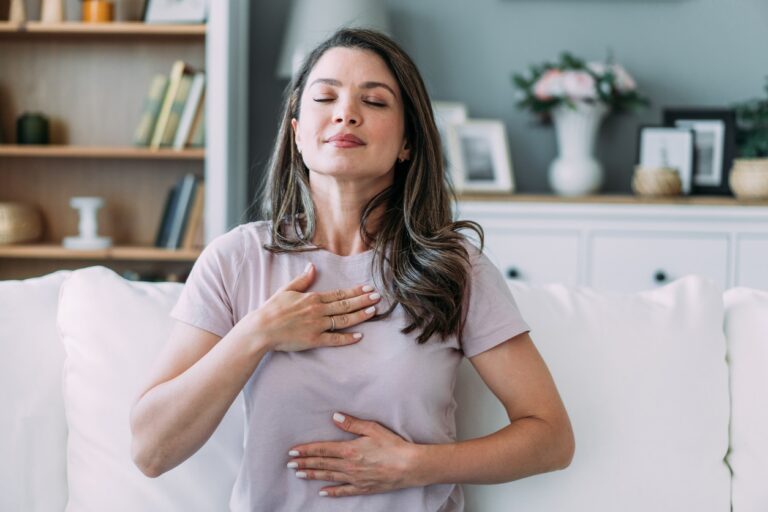
This exercise can help your breathing become deeper and slower.
That has a calming effect on both body and mind, which is why it can be especially helpful in stressful situations and during inner restlessness.
Sit upright and first take a few normal breaths in and out, just to settle for a moment.
Then begin the actual exercise:
The vagus nerve runs from the brainstem, down along the neck and into the abdomen.
It is often called the “rest-and-digest nerve” because stimulating it can help your body relax and come back into a calmer state.
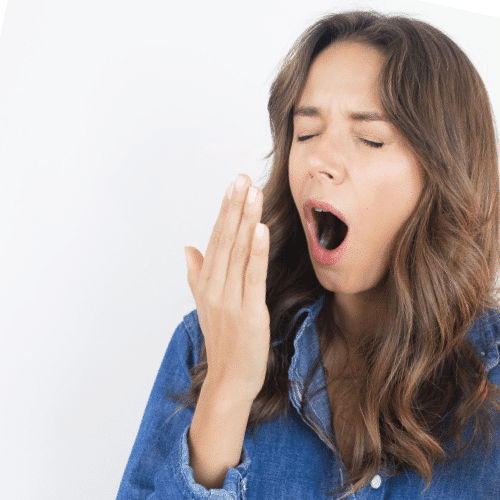
That’s why one of my favorite exercises for heart palpitations is to stimulate the vagus nerve.
You can do this, for example, by gargling with a little water, humming quietly or yawning deeply.
For the yawning exercise, try this little trick:
Open your mouth really wide and try to pronounce an “R” while keeping your mouth open.
If you repeat this a few times, you should automatically start to yawn deeply — and by doing so, activate your vagus nerve and your parasympathetic nervous system.
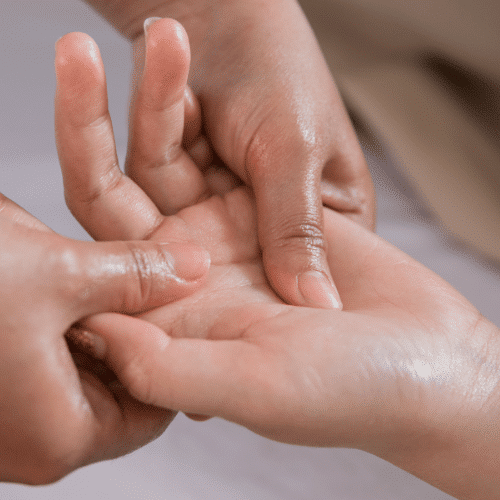
You can also use self-acupressure as an exercise for heart palpitations.
In the middle of your hand, there is a point sometimes referred to as the emergency point.
Wrap your right hand around your left hand so that your right thumb touches the deepest point in the palm of your left hand.
Now massage this point gently in circular movements.
This simple acupressure exercise has helped me calm myself down many times.
When it comes to exercises for heart palpitations, one thing is especially important:
You need to calm yourself down and manage not to add even more stress through your thoughts.
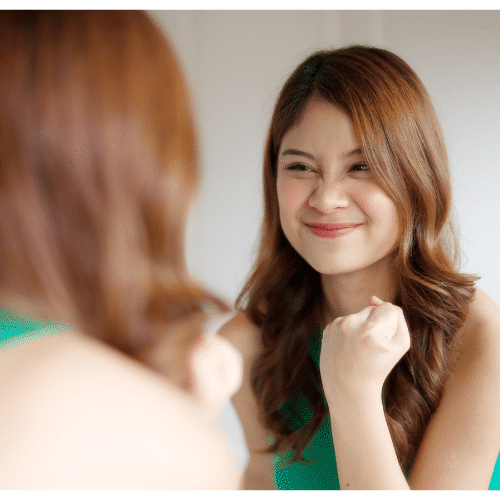
One simple but often very effective method for this is affirmations.
Affirmations are positive messages you say to yourself to influence your thoughts and actions.
For example:
“Everything is going to be okay.”
“I am allowed to calm down.”
“With every breath, I become calmer and more at ease.”
Combined with a breathing exercise, affirmations can have an even more soothing effect.
Here is a suitable exercise from my book:
The important thing is that you find your own sentence — one that feels good to you and genuinely calms you in that moment.
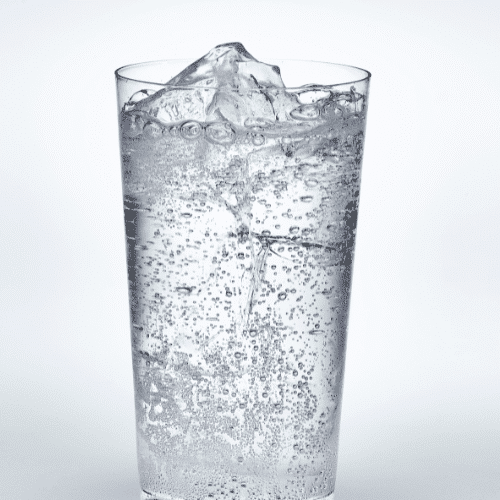
One of the simplest exercises for heart palpitations — but no less helpful:
Drink a glass of ice-cold water, ideally sparkling water.
The cold stimulus helps activate your parasympathetic nervous system, allowing your heartbeat and blood pressure to normalize.
And in general, drinking enough water regularly is important too — while reducing coffee and alcohol can also be helpful — because heart rhythm irregularities such as palpitations may also be encouraged by dehydration.
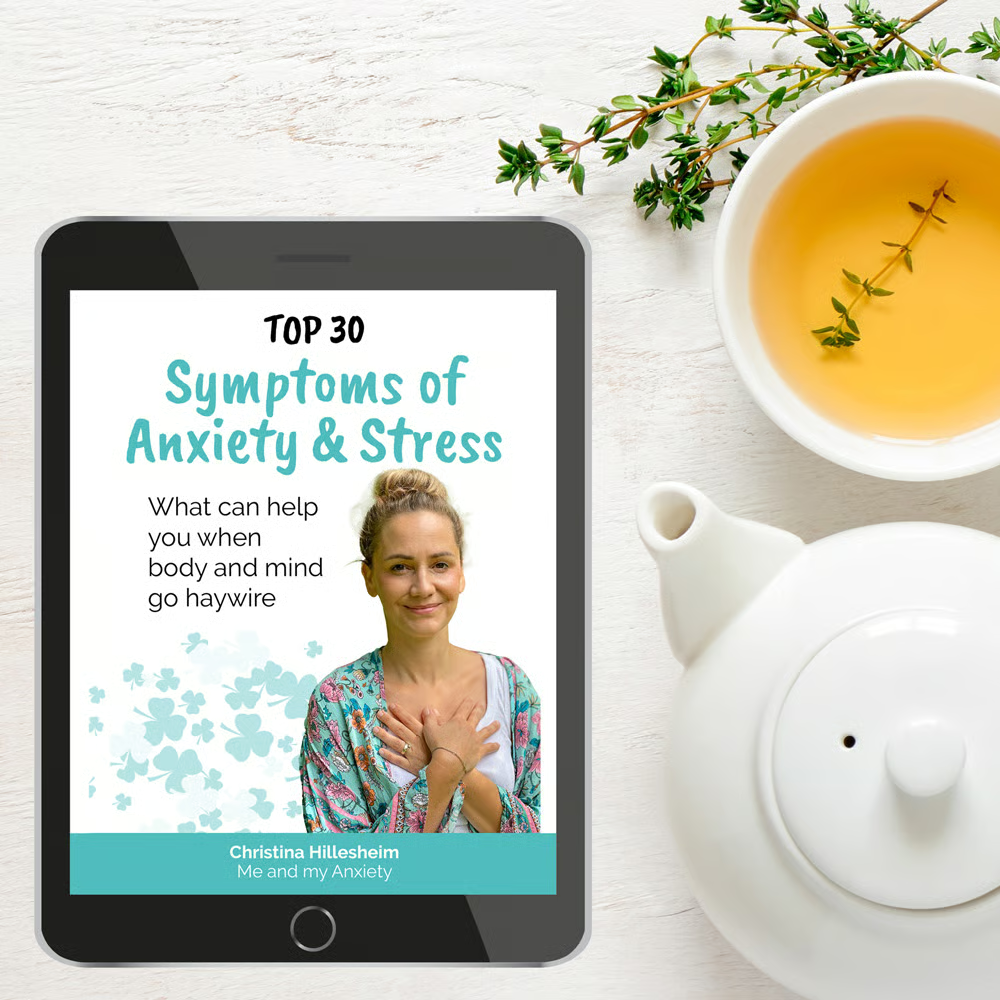
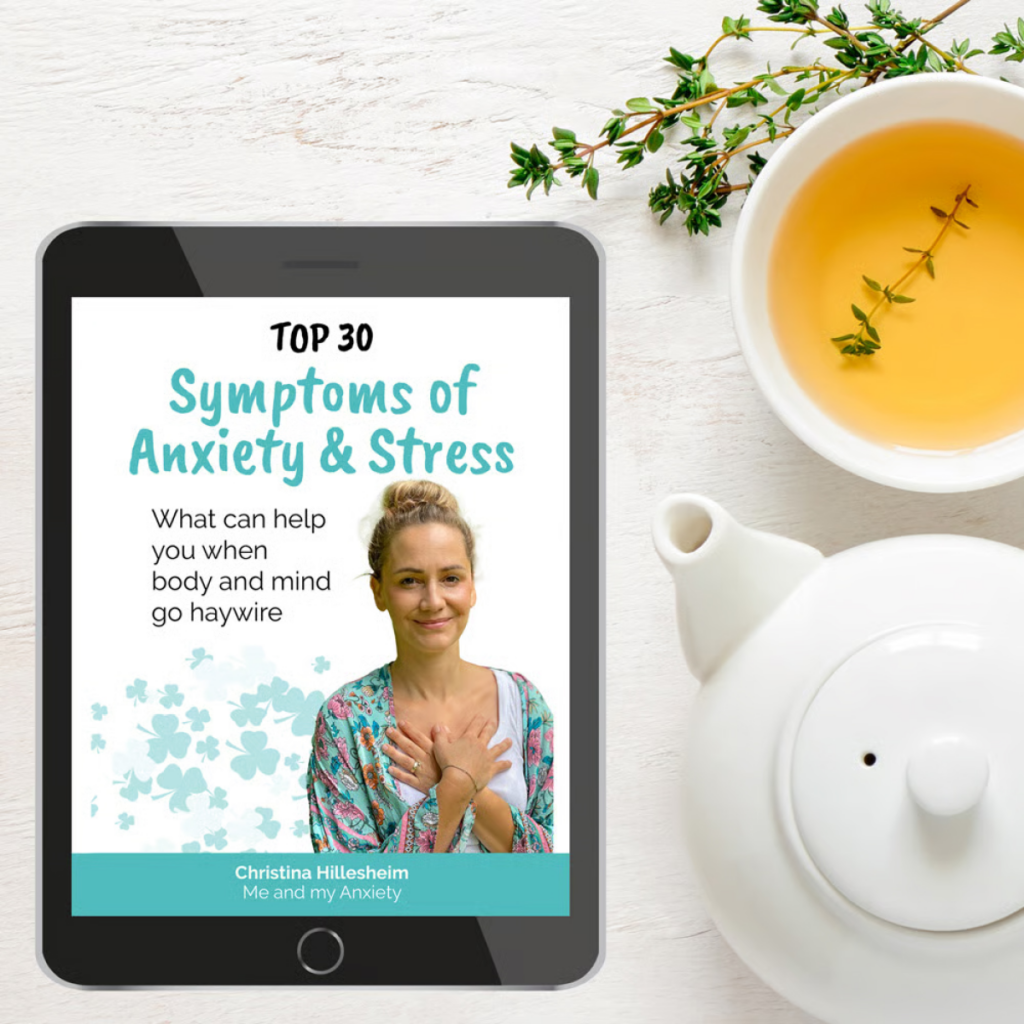
Racing heart, dizziness, nausea, chest pressure … Does your body sometimes feel like it’s going haywire – and you find yourself wondering if it really is “just” anxiety?
Then this e-book is exactly what you need:
👉 TOP 30 Symptoms of Anxiety & Stress
Inside, I reveal the 30 most common physical symptoms associated with anxiety and stress, explain them in easy-to-understand terms, and offer gentle, immediately actionable tips on how to soothe them, step by step.
Try out the exercises above and see whether they help you become calmer – and whether that also helps your heartbeat settle down again.
If heart palpitations, a racing heart or other rhythm disturbances are causing you significant distress or happening more often, please make sure to speak to your doctor and have an ECG done to rule out an underlying medical cause.
If everything is medically fine, then it’s very likely that you are carrying too much stress and tension in your life.
Your task in that case is not only to use these quick exercises when heart palpitations happen, but also to adjust your lifestyle in a way that brings more inner peace and relaxation into your everyday life.
My tips:
About the Author: Christina is a qualified sociologist, bestselling author from germany. She knows from personal experience what it is like to suffer from anxiety, panic and exhaustion.
After a burnout and years with depression and anxiety disorder, she fundamentally changed her life.
In her Online Courses, her E-Books and podcasts, Christina shows how psychosomatic complaints develop, how your nervous system communicates with you — and how you can manage to ease such physical symptoms.
Extrasystoles – additional heartbeats – are usually harmless and can also occur in people with a healthy heart.
However, if they happen very often or occur together with chest pain, you should see a cardiologist to rule out a medical cause.
Stress-related heart palpitations usually do not require medical treatment.
Create more relaxation in your everyday life, for example through yoga or meditation.
Endurance exercise can help reduce stress.
Avoid alcohol and too much coffee, prioritize good sleep and drink at least 1.5 liters of water per day.
Heart palpitations and a racing heart often occur in acute stress situations, such as panic attacks.
In these cases, the breathing and body-based exercises introduced above may help calm the nervous system and support the heart rhythm in returning to normal.
Would you like to learn more about your psychosomatic symptoms and find out what can help you alleviate them? Then feel free to check out this e-book: