In this post, I want to show you 10 calming techniques for anxiety that can help you calm your body during acute stress situations and panic attacks.
So that you can meet your anxiety with a little more calm and say to it:
Hey, thank you for trying to protect me — but you’re not needed here right now!
Anxiety is a stress response in the body.
And that makes sense. After all, when we feel afraid, we are ready to flee and can react more quickly in dangerous situations – or we freeze and become less noticeable to potential threats, such as predators.
So anxiety is something completely normal. In the truest sense of the word, it is still in our bones from the early days of humanity.
Evolution happens slowly – and that is why anxiety can still show up very intensely and inappropriately strongly for many people today. So strongly that people affected by it sometimes even get the impression themselves that they are totally overreacting.
This first tip can be especially helpful as a preventive measure, so anxiety does not arise in the first place or at least not as intensely.
Because anxiety often develops through stress. When we don’t allow ourselves enough breaks and enough time for ourselves.
And people with anxiety often tend to do exactly that.
One strategy can be to schedule fixed break times in your calendar.
For example, you could take a 5-minute break every hour during work and simply sit there, breathe and give your thoughts a little rest.
But even in acute moments of anxiety, it can help to consciously take a break.
When you notice anxiety rising inside you, put aside what you are doing for a moment and allow yourself a moment of stillness — even five minutes can be deeply soothing.
Personalizing your anxiety means giving it a name and a shape.
With this calming technique, two things happen that can be valuable and helpful:
When anxiety comes over you, your breathing becomes shallow and fast.
Your body goes into alarm mode and makes sure you start sweating, your heart pounds, and you may even begin to tremble …
That is why one of the most effective calming techniques for anxiety is to consciously focus on calming your breath – for example, with a breathing exercise.
Because through your breathing you can directly influence your body’s reactions.
It sounds incredibly simple, but it can truly work wonders!
One popular breathing exercise is the 4-7-8 breathing exercise, and this is how it works:
Repeat the exercise for as long as it feels good for you.
When you feel anxious, your nervous system automatically goes on high alert, and your body responds with all kinds of strange anxiety and stress reactions.
This is rooted in evolution and can hardly be avoided.
So show your body very intentionally that there is no reason to run away by consciously relaxing your muscles.
For example, by clenching your fists and releasing them again, or by doing a short round of “progressive muscle relaxation” according to Jacobson.
Yoga can also be especially effective for reducing anxiety and stress.
If you feel frozen, it can help to move your muscles slowly and intentionally.
In some cases, a short walk can help too — or simply dancing the anxiety out of your body so you can come back to yourself again.
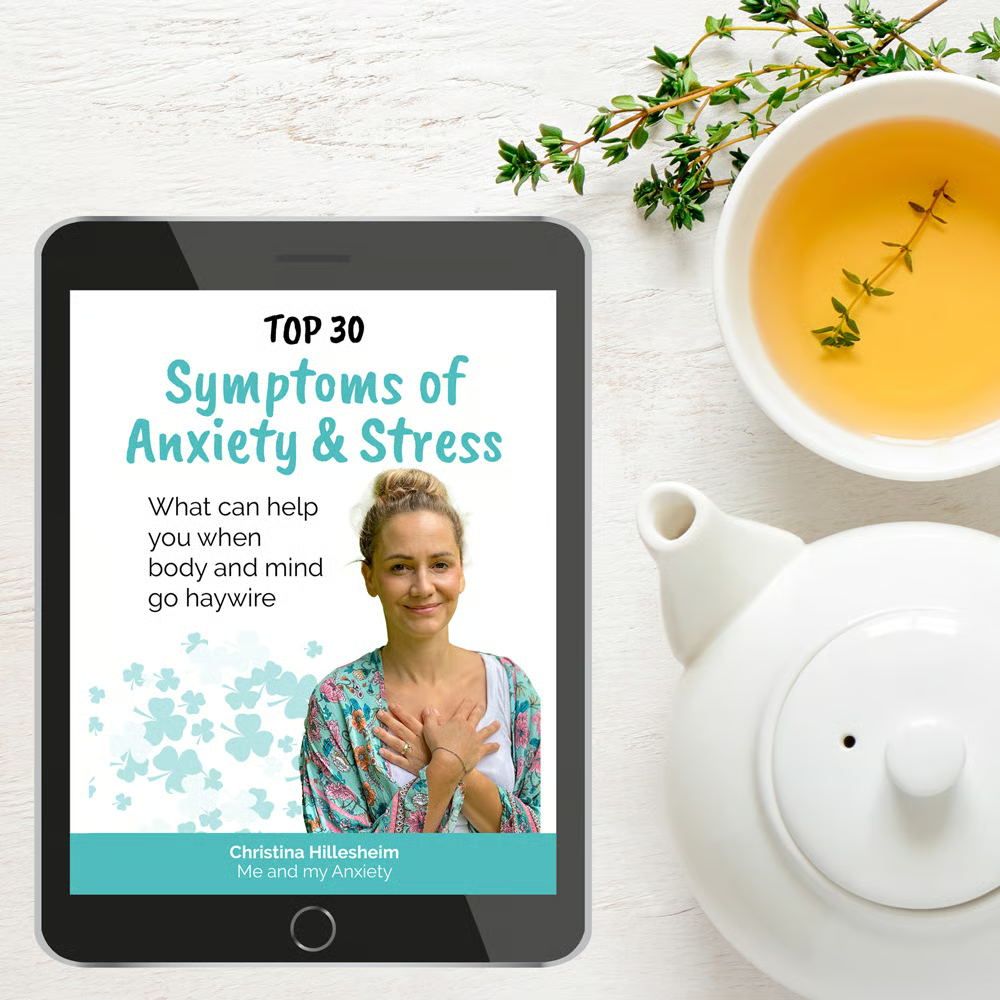
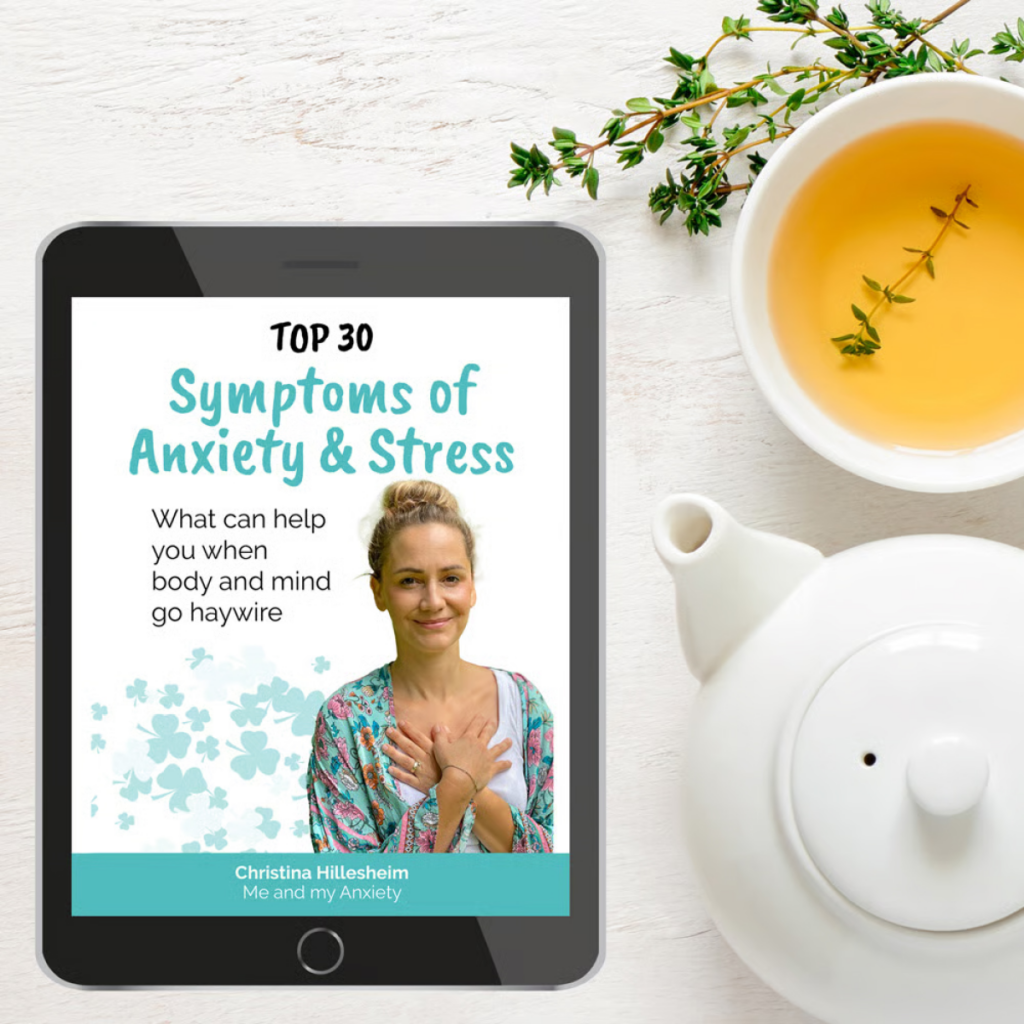
Racing heart, dizziness, nausea, chest pressure … Does your body sometimes feel like it’s going haywire – and you find yourself wondering if it really is “just” anxiety?
Then this e-book is exactly what you need:
👉 TOP 30 Symptoms of Anxiety & Stress
Inside, I reveal the 30 most common physical symptoms associated with anxiety and stress, explain them in easy-to-understand terms, and offer gentle, immediately actionable tips on how to soothe them, step by step.
You can use this calming technique almost anywhere without anyone noticing:
Splash cold water on your face or run it over your wrists – this brings you back into the here and now immediately.
A cold pack on your wrists (or snow in winter) can be just as helpful.
Staying where you are can be a challenge.
And yet, it can be a huge help.
Place your feet firmly on the ground and resist the impulse to flee.
In this way, you use your mind to work against the program your body wants to run because of evolution.
A so-called anchor — for example in the form of a stress ball, a scent or music — can also support you with this.
The biggest part of what makes up your anxiety happens in your mind.
A loud “stop” – either in your thoughts or spoken out loud – can be a signal to your mind that your thoughts can now be redirected.
To distract and calm your thoughts, you could, for example, count, consciously think of something beautiful, repeat positive affirmations to yourself or try to meet your fears with radical acceptance.
Anxiety mainly keeps your eyes busy, because you need to be able to see a potential threat approaching from as far away as possible.
To calm yourself down, it can help to focus on your other senses too.
You can do this, for example, by naming five (or even more) things you can hear, smell, taste and feel.
After that, you can bring your eyes back into the exercise too.
Try to focus your awareness on either neutral or positive things so you don’t give the negativity in your mind even more space.
Anxiety states are as individual as people themselves, and there is no one-size-fits-all solution.
I hope my 10 calming techniques for anxiety were able to help you a little and offer you a bit of inspiration 💜
About the Author: Christina is a qualified sociologist, bestselling author from germany. She knows from personal experience what it is like to suffer from anxiety, panic and exhaustion.
After a burnout and years with depression and anxiety disorder, she fundamentally changed her life.
In her Online Courses, her E-Books and podcasts, Christina shows how psychosomatic complaints develop, how your nervous system communicates with you — and how you can manage to ease such physical symptoms.
The quickest way to calm anxiety is to actively regulate your nervous system. Slow exhales, conscious body awareness and orienting yourself to your surroundings can be especially effective. This helps your brain recognize that there is no immediate danger, and stress hormones can begin to decrease.
Immediate support for anxiety:
Certain reactions can unintentionally intensify anxiety because they signal danger to the brain.
Try to avoid:
A strong anxiety response or panic attack usually reaches its peak after a few minutes and settles down again within 20–30 minutes, especially if you allow the anxiety to be there instead of fighting against it.
When you feel anxious, your breathing automatically becomes faster. Consciously slowing your breath sends a signal to the brain that there is no danger. This can help reduce stress hormones and allow the body to relax.
Would you like to learn more about your psychosomatic symptoms and find out what can help you alleviate them? Then feel free to check out this e-book: